
جرت أقدار السياسة والتاريخ بأن يكون الرجل الذي استُهدف منزله وعائلته من قبل جيش حافظ الأسد وعائلته في 1978 و1981، أحد صناع العلاقة اللبنانية السورية، ولعل هذا من نوادر السياسية ومفارقاتها!
وزير العدل اللبناني عادل نصار أحد أبرز من يصيغ الآن العلاقة القضائية اللبنانية السورية المليئة بالإشكالات والتناقضات وأعباء الماضي الأليم، يعمل على إيجاد صيغ قانونية للتعامع مع عدة قضايا سورية لبنانية وعلى رأسها قضية المسجونين السوريين والجدل الذي لحق بها في الآونة الأخيرة.
نصار الذي درس القانون في الجامعة اليسوعية في بيروت، وتابع دراسته في جامعة هارفارد في الولايات المتحدة، وأكمل دراسة القانون في جامعة باريس الثانية، يعمل جاهداً وبحرص واضح لإيجاد الإطار القانوني لحل المسائل بين سورية ولبنان، مع تأكيده على احترام السيادة والقانون.
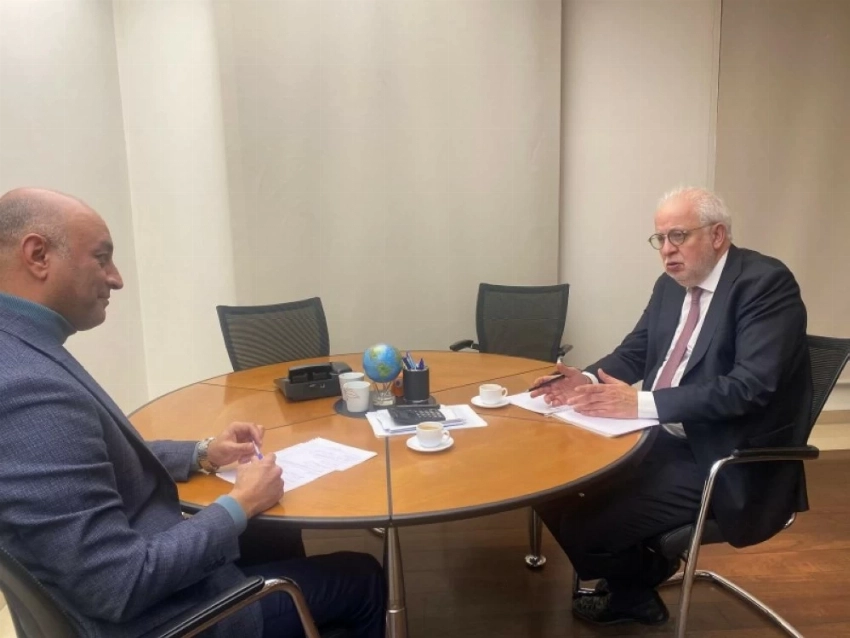
حارس بوابة القانون الوزير نصار التقته «عكاظ» في حديث مطول عن العلاقات السعودية اللبنانية، وتسليم سلاح «حزب الله»، ومستقبل العلاقات السياسية بين بيروت ودمشق في ظل العهد السوري الجديد، فإلى التفاصيل:

دور سعودي لا يمكن إنكاره
• كيف ينظر لبنان إلى دور السعودية في دعم استقراره؟
•• لا يمكن إنكار وقوف السعودية إلى جانب لبنان كدولة ودعمها له، ولا يمكن إلا أن يكون لبنان شاكراً ومعترفاً بجهود المملكة المبذولة على الأصعدة المادية والمعنوية في مواجهة الأزمات التي عصفت -ولا تزال تعصف- بلبنان، عبر مساعدة الدولة بشكل مباشر، ونلمس اليوم رغبة واضحة من المملكة ومن دول العالم في مساعدة لبنان، مقابل القيام بإصلاحات محددة، وقد باشرنا فعلياً بذلك؛ لأنه يحقق مصلحة مباشرة للبنانيين.
لا مبرر لعدم تسليم السلاح
• لو انتقلنا لقضايا الداخل اللبناني.. ما زال «حزب الله» يماطل بتسليم السلاح.. فهل هناك مبرر لذلك؟
•• بعد العدوان الإسرائيلي على لبنان والدمار الذي تسبب به الاحتلال الإسرائيلي، لا مبرر لعدم تسليم سلاح «حزب الله»؛ فهذا السلاح لا يساهم في إحداث أي توازن، وليس رادعاً لاعتداءات إسرائيل على لبنان، وموقف لبنان واضح ويتمثل في الرفض القاطع للانجرار لأي مواجهة عسكرية محكومة بالخسارة، تبعاً لقوة إسرائيل التي تفوق قدرة «حزب الله» على هذه المواجهة وباعترافه، والقوة الفعلية تنبثق من مواجهة الاعتداءات وفقاً لنقاط قوتنا، والتي لا تتحقق إلا باكتمال أركان الدولة اللبنانية وامتلاكها حصرية القرار والقوة، وفرض ذلك عبر المحافل الدولية والقنوات الدبلوماسية، وحتى اليوم لم تُتح الفرصة الحقيقية للبنان لمواجهة المخاطر عبر هذه القنوات، نظراً لكون الدولة اللبنانية منقوصة القرار منذ 1975 بوجود جيش التحرير والجيشين السوري والإسرائيلي على أراضيها ووجود «حزب الله» كقوة موازية للسلطة، ولكن فيما لو اكتملت أركان الدولة اللبنانية، يصبح موقعها التفاوضي وفي المواجهة الدبلوماسية مختلفاً كلياً، وحالياً بدأت مجريات تسليم سلاح «حزب الله»، إذ ينهي الجيش اللبناني مهمته في جنوب الليطاني.
لا رجعة عن نزع السلاح
• البعض يرى أن الحزب بدأ تدريجياً بتسليم سلاحه للجيش.. فلماذا يستمر في الانتقاد؟
•• الحقيقة أن «حزب الله» ليس ميسراً للعملية، ولكن حين يدخل الجيش اللبناني لأخذ السلاح من مركز ما، لا تتم مواجهته بالعسكرة بل بالتسليم، في حين المطلوب منه أن يكون مسهلاً وأكثر مرونة، لأن بناء الدولة اللبنانية ليس مهمة طرف دون الآخر، وهي الضمان الأوحد للبنانيين كافة، ووجود دولة لبنانية قوية وصاحبة القرار دون قوة موازية، يجعلها أكثر قدرة على المواجهة وفرض الوجود في المحافل الدولية، ولا يمكن القبول بعدم حصر السلاح بيد الدولة، ثم مطالبتها بالقيام بدورها الدبلوماسي، ما يجعل من ضرورة اقتناع «حزب الله» بتسليم السلاح لصالح بناء الدولة اللبنانية لا عرقلتها، ولمنح الدولة وسيلة للقيام بدورها في المحافل الدولية، على الجميع أن يختار الدولة اللبنانية.. ولكن في جميع الأحوال فإن قرار نزع السلاح اتُخذ ويجب تطبيقه مهما كانت المواقف والظروف.
حكومات سابقة لم تكن صارمة
• لكن دعوات تسليم السلاح من قبل الحكومات اللبنانية لم تؤدِ إلى حل؟
•• لا هذا ليس دقيقاً، الحكومات السابقة لم تتخذ موقفاً صارماً من هذا الموضوع، فكانت تارة تقول كلاماً مبهماً أو قابلاً لازدواجية القرار والتأويل، إذ كانت هذه الثلاثية التاريخية المتمثلة بـ«الشعب، الجيش، المقاومة» مبنية على منطق مغاير لمنطق حديث الدولة اليوم، فالحكومة اللبنانية الحالية -خلافاً للحكومات السابقة- لديها قناعة متبلورة من رئيسَي الحكومة نواف سليم، والدولة جوزيف عون، والوزراء؛ بعدم القبول بالازدواجية، ولذلك تم التأكيد على حصرية السلاح بيد الدولة في خطاب قسم الرئيس، كما ورد في البيان الوزاري كأحد أهم أهداف الدولة اللبنانية، وحين تم وضع البيان الوزاري تم التأكيد على أهمية بناء دولة بكامل مقوماتها معترف بها، تتمثل بوجود الشعب والجغرافية والحدود وحصرية القوة بيد السلطة تحت سقف القانون، ومع تكرار هذا المفهوم في البيان الوزاري والإشارة الواضحة وغير القابلة للتأويل إلى وجوب حصر السلاح بيد الدولة، تمت الموافقة بالإجماع عليه، ومُنحت الحكومة الثقة بناء على هذا المشروع، حتى من قبل نواب «حزب الله»، إذ كان البيان الوزاري واضحاً وموجهاً في هذا السياق، وأي تغير في المواقف يُعتبر خروجاً عن الموضوع فقد تم التوافق عليه سابقاً.
تداعيات سقوط الأسد
• كيف انعكس سقوط نظام الأسد على لبنان؟
•• لا شك أن لبنان عانى الكثير من النظام السوري السابق، حتى أنه على الصعيد الشخصي، تعرض منزلي للقصف عام 1978 وتكرر القصف في 1981، وأصيب أحد أفراد أسرتي، ولكننا اليوم كدولتين جارتين، نبني علاقاتنا على احترام كل منا لسيادة الآخر، ولا أعتقد أن الحكومة السورية الحالية، توجه أنظارها نحو انتقاص سيادة لبنان، ولمست ذلك خلال ترؤسي الوفد اللبناني في اجتماع مع الوفد السوري برئاسة وزير العدل، ومن المؤكد وجود أكثر من إشكالية مع النظام السابق، نتمنى عدم وجودها مع الحكومة الحالية، وبناء علاقات جوار جيدة، قائمة على احترام كل طرف سيادة الآخر لمصلحة الطرفين، فالجوار يفرض على الدولتين التوافق لوجود المصالح المشتركة.
• هل هناك هواجس في لبنان من الوضع في سورية؟
•• في ما يتعلق بالهواجس في الأوساط اللبنانية من تحول الدولة الجديدة إلى نسخة من النظام السابق وتحرشها مجدداً بلبنان، يمكن القول إن الصدمة أمر مشروع عند الشعوب في حال الإشكالات، والهواجس طبيعية، ودورنا اليوم يتمثل في تبديد هذه الهواجس من كلا الطرفين، عبر مواقف ضامنة تبدد القلق من العودة لأخطاء الماضي، وقد لمست وعياً تاماً من الطرف السوري المتمثل بوزير العدل والوفد المرافق له لهذه الهواجس ورغبتهم في تبديدها، ما يبث تفاؤلاً ببناء الثقة اللازمة والتطمينات، لضمان راحة الشعبين في ظل أداء الدولتين.
قضية السجناء السوريين
• ما أهم القضايا العالقة بين الطرفين السوري واللبناني؟
•• أعلم أنك تقصد قضية السجناء السوريين في لبنان، وقد تمت مناقشتها مع الوفد السوري، مع التأكيد أن لبنان يرفض اعتقال أي شخص أو ملاحقته تبعاً لرأيه أو موقفه السياسي، كما أن لبنان يعاني من اكتظاظ بالسجون غير المرتبطة بجنسية معينة، وهذا عائد لعوامل عدة في كثير من بلدان العالم، التي توجه اهتمامها نحو دعم منشآت أخرى، والأمر يستدعي التخفيف من عدد السجناء والموقوفين احتياطياً بانتظار المحاكمة، ولكن كل دولة لديها منظومة سياسية من جهة وأخرى قضائية وأمنية، والمنظومتان منفصلتان بفعل فصل السلطات.
اتهامات بالعرقلة
• إلى أين وصل موضوع السجناء خصوصاً بعد اللقاءات المتكررة مع الجانب السوري؟
•• حين طُرح موضوع السجناء أوضحت أن هناك سجناء محكومين وآخرين ملاحقين، ما يستوجب نقل المحكومين منهم إلى سورية ضمن اتفاقيات سهلة وسوابق في هذا السياق، أما نقل السجناء كافة بمن فيهم الملاحقون، فلا توجد اتفاقيات تنص عليها إلا في نطاق ضيق بأروربا، وعرضت أن أعمل على إيجاد أسس قانونية لحل هذا الإشكال وفق اتفاقية ما، فليست هناك صلاحية تمنح أي مسؤول مثل هذا القرار..
وبناء على ما تقدم عملنا على هذا الإطار القانوني وعرضنا المشروع على هيئة التشريع والاستشارات وتمت الموافقة على مضمونه، ما يعني إيجاد الإطار المؤسساتي والقانوني لمعالجة هذه المسألة، وتم الاجتماع مع الوفد السوري وتداول المعطيات وطلب بعض التعديلات والنقاش بين الطرفين، وتم التطرق إلى استثناء القتلة سواء للعساكر أو المدنيين، والاغتصاب، وتتضمن الاتفاقيات معالجة المحافظة على الحق الشخصي والمحافظة على السيادة وما إلى ذلك، وطالب الطرف السوري في ما بعد بعدم انتظار قرار مجلس النواب، ما يجعل أمر المحكومين قابلاً للتنفيذ، وتم في ما بعد الاتفاق على تنظيم اتفاقية تخص المحكومين وأخرى للملاحقين، وحدث سوء تفاهم في ما بعد على هذه النقطة، وصدرت في ما بعد مقالات في الصحف تتهمنا بالعرقلة، فيما كنا نحاول جاهدين إيجاد أفضل الحلول دون ضرب أسس القوانين مرعية الإجراء وضمان سلامة وإخراج هذه القرارات بطريقة سليمة قانونياً وتقنياً ضمن الصلاحيات المتاحة، ولكن المبادرة لا تزال قيد النقاش بين الطرفين.
القرار ليس بأيدينا
• وهل توقفت مسألة تسليم السجناء السوريين عند هذا الحد؟
•• لم ينتهِ المسار حتماً، والجهود لا تزال مستمرة، ولا أرغب في تسميته إفراجاً وإنما نقل المحكومين أو الموقوفين للدولة الأخرى، عملنا على الإطار القانوني اللازم، جزء منه يُترجم من خلال إبرام اتفاقية لا تحتاج لإقرار مجلس النواب، وجزء لا يمكن تنفيذه إلا بعد مصادقة مجلس النواب، ولكن بالمضمون هذه اتفاقية ولكل فريق وجهة نظر، وتحتاج لاتفاق بين الطرفين، والرغبة في إيجاد الحل موجودة قطعاً، ولكن ضمن السيادة والقوانين مرعية الإجراء، لأن لا أحد يملك الصلاحية لمعالجة هذا الأمر بتوقيع أو قرار منفرد، يجب أن يكون هناك إطار قانوني، ولا يمكن للسلطة التنفيذية تقرير مصير الموقوفين، هذا الأمر بيد السلطة القضائية.
ودعني أقول من جهتنا فإن الرغبة موجودة ولكن القرار ليس بأيدينا ولا من صلاحياتنا، وليس من حق وزير العدل أي قرار يتعلق بالإفراج عن أي موقوف لبناني أو غير ذلك.
وضع المختفين قسراً
• إذن ما القضايا العالقة حالياً بين دمشق وبيروت؟
•• من القضايا العالقة بين الطرفين، وضع المختفين اللبنانيين قسراً في سورية، وقضية اللبنانيين الفارين من العدالة إلى سورية، والمطالبة بالمعلومات المتوفرة لدى السلطات السورية من إرث النظام السابق، والتي يمكن أن تساهم في التحقيقات بلبنان والمرتبطة بأعمال أمنية من اغتيالات وتفجيرات من 2005 حتى اليوم، وتشمل سمير قصير وبيار غسان تويني ووليد عيدو وغيرهم.. إلى لقمان سليم، علماً بأنه يمكن ألا تتوفر مستندات واضحة، ولكن نطالب بأي مستندات يمكن أن توفر معلومات للمحققين العدليين الذين تم تعيينهم لكل ملف، فالموضوع ضروري جداً للبنان ويمثل إدانة للنظام السوري السابق، وخلال المباحثات بين الطرفين، كان موقف السلطة السورية من هذه الملفات إيجابياً، والرغبة في التعاون موجودة في ما يتعلق بالأطر المتوفرة لكلا الطرفين بطرق قانونية، وتجدر الإشارة هنا إلى ضرورة إدراك الجانب السوري أهمية هذه المتطلبات للبنان.
وتجب الإشارة مجدداً إلى أهمية تخفيف الضغط على السجون في لبنان، ما جعلنا ننشئ قاعة محاكمة ملاصقة لسجن رومية، كإجراء يضمن تسريع المحاكمات دون تجاهل الأطر القانونية، والأمر هنا متعلق بالمحاكمات المتعلقة بمحافظة جبل لبنان التي تمتلك أكبر عدد من المحاكمات، في معالجة آنية لمشكلة نقل المحكومين التي كانت تعيق سابقاً المحاكمات، إذ كان عدد جلسات المحاكمات التي تكتمل لا يتجاوز 33% وأصبحت تقريباً 82%، فنحن معنيون بتسريع المحاكمات وتخفيف الاكتظاظ بالسجون، مع الأخذ بعين الاعتبار أنه يتم إخلاء عدد، وبالمقابل توقيف عدد آخر في التوقيت ذاته، ولأسباب مغايرة، ما يجعل من الصعب تحديد بصورة دقيقة عدد الموقوفين.
طي صفحة المشاركين في الحرب
• ماذا عن ملاحقة اللبنانيين المشاركين في الحرب السورية؟ وكيف تنظرون إلى هذه المسألة؟
•• قلت من قبل إن الرئيس السوري أحمد الشرع يرغب في طي هذه الصفحة، ورحبت بذلك، وأنا ضد مشاركة أي لبناني في الحرب في أي دولة أخرى، ولكن في السياسة أنا أرى أن من حق الشعب السوري أن يثور على النظام السابق الديكتاتوري الذي طال أذاه الشعب السوري واللبناني، متمنياً أن يتحقق السلم الأهلي في سورية، مع التأكيد على الاحترام المتبادل لسيادة كل دولة وعدم التدخل بشؤونها واحترام منظومتها القانونية.
وزير العدل ليست مهمته الفصل في هذه الأمور، ولكن كما ترغب الحكومة السورية في استعادة محكوميها، كل دولة تعمل على حماية مواطنيها، ونص الاتفاقية التي يتم العمل عليها تشمل المحكومين اللبنانيين في سورية والسوريين في لبنان، وأكرر أنني ضد أي مشاركة لبنانية في حروب الآخرين وضد النظام السابق دون أي تردد، ولكن قانونياً البحث يكون وفقاً للدعاوى، ولا أسمح لنفسي البت في هذا الموضوع، وهنا يجب التفريق بين السياسة والقانون.
The fates of politics and history have conspired such that the man whose home and family were targeted by the army of Hafez al-Assad and his family in 1978 and 1981 is one of the architects of the Lebanese-Syrian relationship, and perhaps this is one of the curiosities and paradoxes of politics!
The Lebanese Minister of Justice, Adel Nassar, is one of the most prominent figures currently shaping the Lebanese-Syrian judicial relationship, which is fraught with issues, contradictions, and the burdens of a painful past. He is working to find legal frameworks to address several Syrian-Lebanese issues, foremost among them the issue of Syrian prisoners and the controversy that has followed it recently.
Nassar, who studied law at the Jesuit University in Beirut, continued his studies at Harvard University in the United States and completed his legal education at the University of Paris II, is diligently and clearly working to establish a legal framework for resolving issues between Syria and Lebanon, while emphasizing respect for sovereignty and the law.
The gatekeeper of the law, Minister Nassar, met with "Okaz" for an extensive discussion about Saudi-Lebanese relations, the disarmament of "Hezbollah," and the future of political relations between Beirut and Damascus under the new Syrian regime. Here are the details:
A Saudi Role That Cannot Be Denied
• How does Lebanon view Saudi Arabia's role in supporting its stability?
•• Saudi Arabia's support for Lebanon as a state cannot be denied, and Lebanon can only be grateful and acknowledge the efforts of the Kingdom made on both material and moral levels in facing the crises that have struck—and continue to strike—Lebanon, through direct assistance to the state. Today, we can clearly sense a desire from the Kingdom and from countries around the world to help Lebanon, in exchange for specific reforms, and we have actually begun to implement these reforms; because it serves the direct interest of the Lebanese people.
No Justification for Not Disarming
• If we move to internal Lebanese issues... "Hezbollah" continues to procrastinate in disarming... Is there any justification for that?
•• After the Israeli aggression against Lebanon and the destruction caused by the Israeli occupation, there is no justification for "Hezbollah" not to disarm; this weapon does not contribute to achieving any balance, nor does it deter Israeli attacks on Lebanon. Lebanon's position is clear and consists of a categorical rejection of being dragged into any military confrontation that is bound to end in defeat, given Israel's superior strength compared to "Hezbollah" in this confrontation, as acknowledged by "Hezbollah" itself. Actual strength emanates from confronting aggressions according to our points of strength, which can only be achieved by completing the pillars of the Lebanese state and possessing exclusive decision-making and power, and enforcing that through international forums and diplomatic channels. Until today, the real opportunity for Lebanon to confront dangers through these channels has not been available, due to the fact that the Lebanese state has been lacking decision-making power since 1975 with the presence of the Liberation Army and the Syrian and Israeli armies on its territory, and the presence of "Hezbollah" as a parallel force to the authority. However, if the pillars of the Lebanese state are completed, its negotiating position and diplomatic confrontation would be completely different. Currently, the process of disarming "Hezbollah" has begun, as the Lebanese army completes its mission in southern Litani.
No Turning Back on Disarmament
• Some see that the party has gradually begun to hand over its weapons to the army... So why does it continue to face criticism?
•• The truth is that "Hezbollah" is not facilitating the process; however, when the Lebanese army enters to take weapons from a certain location, it is not met with militarization but with surrender. What is required of it is to be more accommodating and flexible, because building the Lebanese state is not the task of one party alone; it is the sole guarantee for all Lebanese. The existence of a strong Lebanese state with decision-making power without a parallel force makes it more capable of confronting and asserting its presence in international forums. It is unacceptable to not confine weapons to the state and then demand that it perform its diplomatic role. For "Hezbollah" to be convinced to hand over its weapons for the sake of building the Lebanese state, not obstructing it, and to provide the state with a means to perform its role in international forums, everyone must choose the Lebanese state. However, in all cases, the decision to disarm has been made and must be implemented regardless of positions and circumstances.
Previous Governments Were Not Strict
• But calls for disarmament from Lebanese governments have not led to a solution?
•• No, this is not accurate. Previous governments did not take a strict stance on this issue; they sometimes made ambiguous statements or statements that allowed for dual interpretations. This historical triad represented by "the people, the army, and the resistance" was based on a logic different from the logic of a modern state today. The current Lebanese government—unlike previous governments—has a well-formed conviction from Prime Minister Nawaf Salam, State President Joseph Aoun, and the ministers; that they will not accept duality. Therefore, it was emphasized that the exclusivity of weapons should be in the hands of the state in the president's oath speech, as stated in the ministerial statement as one of the most important goals of the Lebanese state. When the ministerial statement was drafted, it was emphasized the importance of building a state with all its recognized components, represented by the existence of the people, geography, borders, and the exclusivity of power in the hands of authority under the rule of law. With the repetition of this concept in the ministerial statement and the clear and unambiguous reference to the necessity of confining weapons to the state, it was unanimously approved, and the government was granted confidence based on this project, even by the deputies of "Hezbollah," as the ministerial statement was clear and directed in this context. Any change in positions is considered a deviation from the topic that had been previously agreed upon.
Consequences of the Fall of Assad
• How did the fall of the Assad regime reflect on Lebanon?
•• There is no doubt that Lebanon suffered greatly from the previous Syrian regime, to the extent that personally, my home was bombed in 1978 and the bombing was repeated in 1981, and a member of my family was injured. However, today, as neighboring states, we build our relations on mutual respect for each other's sovereignty. I do not believe that the current Syrian government is directing its attention towards undermining Lebanon's sovereignty. I sensed this during my presidency of the Lebanese delegation at a meeting with the Syrian delegation headed by the Minister of Justice. It is certain that there are more than one issue with the previous regime, and we hope that these do not exist with the current government, and that we build good neighborly relations based on mutual respect for each other's sovereignty for the benefit of both parties, as neighborhood imposes on both states the necessity of agreement due to the existence of common interests.
• Are there concerns in Lebanon about the situation in Syria?
•• Regarding the concerns in Lebanese circles about the new state turning into a replica of the previous regime and harassing Lebanon again, it can be said that shock is a legitimate reaction among peoples in the event of problems, and concerns are natural. Our role today is to dispel these concerns from both sides through reassuring positions that alleviate the anxiety of returning to past mistakes. I have sensed complete awareness from the Syrian side represented by the Minister of Justice and his accompanying delegation regarding these concerns and their desire to dispel them, which instills optimism in building the necessary trust and reassurances to ensure the comfort of both peoples in light of the performance of both states.
The Issue of Syrian Prisoners
• What are the most important outstanding issues between the Syrian and Lebanese sides?
•• I know you mean the issue of Syrian prisoners in Lebanon, which has been discussed with the Syrian delegation, with the emphasis that Lebanon rejects the arrest of any person or pursuing them based on their opinion or political stance. Lebanon is also suffering from overcrowding in prisons that are not linked to a specific nationality, and this is due to several factors in many countries around the world, which direct their attention towards supporting other facilities. This situation necessitates reducing the number of prisoners and detainees awaiting trial. However, each state has a political system on one hand and a judicial and security system on the other, and the two systems are separate due to the separation of powers.
Accusations of Obstruction
• Where does the issue of prisoners stand, especially after repeated meetings with the Syrian side?
•• When the issue of prisoners was raised, I clarified that there are convicted prisoners and others who are wanted, which necessitates transferring the convicted ones to Syria under easy agreements and precedents in this context. As for transferring all prisoners, including the wanted ones, there are no agreements stipulating this except in a narrow scope in Europe. I offered to work on finding legal foundations to resolve this issue according to some agreement, as there is no authority granting any official such a decision...
Based on the above, we worked on this legal framework and presented the project to the Legislative and Consultative Authority, and its content was approved, which means finding the institutional and legal framework to address this issue. A meeting was held with the Syrian delegation to discuss the data and request some amendments and discussions between the two sides. The issue of excluding murderers, whether of soldiers or civilians, and rape was addressed, and the agreements include addressing the preservation of personal rights and sovereignty, and so on. The Syrian side later requested not to wait for the decision of the House of Representatives, which makes the matter of the convicted ones executable. It was later agreed to organize an agreement concerning the convicted and another for the wanted, and a misunderstanding occurred later on this point, and articles appeared in newspapers accusing us of obstruction, while we were striving to find the best solutions without undermining the foundations of applicable laws and ensuring the safety and proper legal and technical issuance of these decisions within the available powers. However, the initiative is still under discussion between the two sides.
The Decision Is Not in Our Hands
• Has the issue of handing over Syrian prisoners stopped at this point?
•• The process has certainly not ended, and efforts are still ongoing. I do not wish to call it a release but rather the transfer of the convicted or detained individuals to the other state. We worked on the necessary legal framework, part of which is translated through concluding an agreement that does not require the approval of the House of Representatives, and part cannot be implemented except after the ratification of the House of Representatives. However, in substance, this is an agreement, and each party has its own perspective, and it requires an agreement between the two sides. The desire to find a solution is certainly present, but within the framework of sovereignty and applicable laws, because no one has the authority to address this matter with a signature or a unilateral decision. There must be a legal framework, and the executive authority cannot decide the fate of the detainees; this matter is in the hands of the judicial authority.
Let me say from our side that the desire is present, but the decision is not in our hands nor within our powers, and it is not the right of the Minister of Justice to make any decision regarding the release of any Lebanese detainee or otherwise.
The Situation of the Disappeared
• So what are the current outstanding issues between Damascus and Beirut?
•• Among the outstanding issues between the two sides is the situation of the Lebanese who have been forcibly disappeared in Syria, the issue of Lebanese fleeing justice to Syria, and the demand for information available to the Syrian authorities from the legacy of the previous regime, which can contribute to investigations in Lebanon related to security operations such as assassinations and bombings from 2005 to the present, including Samir Qasir, Pierre Ghassan Tueni, Walid Eido, and others... up to Luqman Salim. It should be noted that clear documents may not be available, but we demand any documents that can provide information to the judicial investigators who have been appointed for each file, as this matter is very important for Lebanon and represents a condemnation of the previous Syrian regime. During the discussions between the two sides, the Syrian authority's position on these files was positive, and the desire for cooperation exists regarding the available frameworks for both parties in legal ways. It is important to note here the necessity for the Syrian side to recognize the importance of these requirements for Lebanon.
It should be reiterated the importance of alleviating pressure on prisons in Lebanon, which led us to establish a trial hall adjacent to Roumieh Prison, as a measure to ensure the acceleration of trials without neglecting legal frameworks. This matter is related to trials concerning Mount Lebanon, which has the largest number of trials, in an immediate solution to the problem of transferring the convicted individuals that previously hindered trials, as the number of completed trial sessions did not exceed 33% and has now become approximately 82%. We are concerned with accelerating trials and alleviating overcrowding in prisons, taking into account that a number are being released, while at the same time, another number is being detained for different reasons, making it difficult to accurately determine the number of detainees.
Turning the Page on War Participants
• What about pursuing Lebanese participants in the Syrian war? How do you view this issue?
•• I have said before that the Syrian President Ahmad al-Shara wishes to turn this page, and I welcomed that. I am against any Lebanese participation in wars in any other country, but in politics, I see that the Syrian people have the right to revolt against the previous dictatorial regime that harmed both the Syrian and Lebanese people. I hope that civil peace is achieved in Syria, while emphasizing mutual respect for the sovereignty of each state and non-interference in its affairs and respect for its legal system.
The Minister of Justice's role is not to adjudicate these matters, but as the Syrian government wishes to reclaim its convicts, every state works to protect its citizens. The text of the agreement being worked on includes Lebanese convicts in Syria and Syrians in Lebanon. I reiterate that I am against any Lebanese participation in the wars of others and against the previous regime without hesitation, but legally, the search is conducted according to the lawsuits, and I do not allow myself to decide on this matter. Here, it is necessary to distinguish between politics and law.
ملحوظة: مضمون هذا الخبر تم كتابته بواسطة عكاظ ولا يعبر عن وجهة نظر مصر اليوم وانما تم نقله بمحتواه كما هو من عكاظ ونحن غير مسئولين عن محتوى الخبر والعهدة علي المصدر السابق ذكرة.